How to Start Composting in a Small Apartment: The 2026 Urban Guide
The Urban Alchemist: How to Start Composting in a Small Apartment in the Modern Era of 2026
One of the most persistent and frustrating hurdles to sustainable living for the modern city dweller has always been the effective and hygienic management of organic waste. We often feel that because we lack the traditional backyard, the sprawling garden, or the communal compost pile, we are physically forced to participate in a system that sends our valuable food scraps to a landfill, where they decompose anaerobically and produce harmful methane gas. However, as we move through 2026, the technology and specialized techniques for "Indoor Composting" have reached a level of sophistication and aesthetic integration that makes it accessible, odorless, and even rewarding for everyone. This is the definitive, high-end guide on How to Start Composting in a Small Apartment without compromising your home's "Lounge" atmosphere. Composting is far more than just a waste reduction strategy; it is a profound act of participating in the "Circular Economy" at a fundamental household level. It is the art of biological alchemy-turning your daily "waste" into "black gold"-a highly concentrated, nutrient-rich fertilizer that can fundamentally transform the health and vibrancy of your indoor plant collection and your balcony sanctuary. In the core Lounge philosophy, we place immense value on the connection between our indoor environments and the restorative power of the natural world (as explored in our Art of Hygge guide). Composting is the ultimate expression of this connection, closing the loop between what we consume and what we create. Let us explore how you can become an urban alchemist in your own kitchen, regardless of your square footage.
The Urban Composting Blueprint:
- 1. Choosing Your Biological Engine: Bokashi vs. Vermicomposting
- 2. The Bokashi Protocol: Rapid, Odorless Microbial Fermentation
- 3. Vermicomposting 2026: Partnering with the Earth's Premier Recyclers
- 4. Electric Dehydrators: The High-Tech "Instant" Compost Solution
- 5. The Art of Maintenance: Engineering an Odor-Free Environment
- 6. Utilizing Your Harvest: Fertilizing Your Indoor Forest
- Frequently Asked Questions about Modern Apartment Composting
1. Choosing Your Biological Engine: Bokashi vs. Vermicomposting
The first and most critical step in mastering How to Start Composting in a Small Apartment is selecting the specific biological "engine" that best aligns with your daily routine and your comfort level. There are two primary "analog" methods that have become the standard for the 2026 urbanite: Bokashi and Vermicomposting. While both successfully transform organic matter into fertilizer, they operate on entirely different biological principles and have different spatial requirements. Bokashi is fundamentally a fermentation process. It utilizes specialized, anaerobic microbes to "pickle" your food waste in an airtight environment. It is incredibly compact and can handle virtually any food waste, including meat, dairy, and citrus. Vermicomposting, on the other hand, utilizes a specific species of composting earthworms (usually Red Wigglers) to physically consume and break down your food scraps into "castings." It is a fascinating, living ecosystem that results in what is arguably the most powerful and nutrient-dense organic fertilizer on the planet. Your choice will ultimately depend on the volume of waste you produce and whether you are comfortable "hosting" a colony of helpful worms in your home.
2. The Bokashi Protocol: Rapid, Odorless Microbial Fermentation
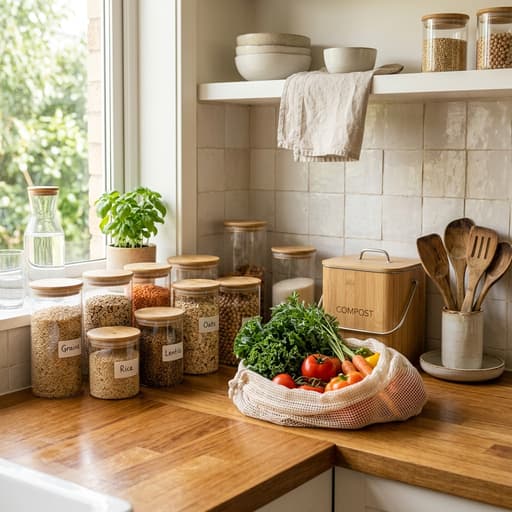
!Composting in a Small Apartment From waste to wonder. Master the art of composting in your own apartment.[/caption] For many apartment dwellers, the Bokashi system is the preferred point of entry. The system is elegantly simple: it consists of an airtight, specialized bucket (often with a spigot to drain "Bokashi tea") and a supply of "Bokashi Bran"-a substrate that has been inoculated with beneficial Effective Microorganisms (EM). You simply add your daily food scraps to the bin, sprinkle a layer of bran, and use a dedicated tool to press out the air. Because the process is anaerobic (without oxygen), there is zero rot and, consequently, zero foul odor. It is perfectly suited for a minimalist Composting in a Small Apartment kitchen. In 2026, Bokashi bins have evolved from simple plastic buckets into high-end design objects, featuring matte-finish ceramics and stainless steel details that blend seamlessly into a premium Interior. Once your bin is full, it must sit undisturbed for approximately two weeks to complete the fermentation process. At this stage, the "pickled" waste is still physically intact but biologically transformed. To complete the process, this fermented matter must be buried in a "soil factory" (a larger container of soil on a balcony) or donated to a local community garden. It is a clean, hyper-efficient, and scientifically robust system for the modern urban sanctuary.