Remote Work Harmony: How to Balance Family Life and Career Ambitions
- By admin
- 04 May 2026
Finding the Balance Between Your Home Office and Your Living Room
Remote work has permanently reshaped the modern professional landscape. But when your office is just a few steps from the kitchen table, the invisible boundary between your career and your home life can dissolve almost overnight. The secret to building a truly sustainable remote work lifestyle is cultivating a deliberate sense of proportion. It is vital not to swing to either extreme—locking yourself away in total isolation or allowing the warm chaos of family life to completely derail your professional focus. Harmony in remote work comes from establishing boundaries that work tactfully together, rather than imposing rigid, military-style rules on an already-shared space.
If your home office already feels disconnected and cold, adding a noise-canceling headset worn for ten unbroken hours might only deepen that isolation, creating a quiet form of "family fatigue" that erodes the relationships you came home to protect. On the other hand, if you're currently trying to close major deals from the corner of a busy kitchen table, you can dramatically refresh your productivity by introducing subtle, targeted signals that communicate your focus without building walls. The goal is to feel the unique rhythm of your household—and when the balance is finally right, your natural workflow will merge seamlessly with your family's daily life. Here are five powerful strategies to help you find that harmony.
1. Define a Workspace That Communicates Without Words
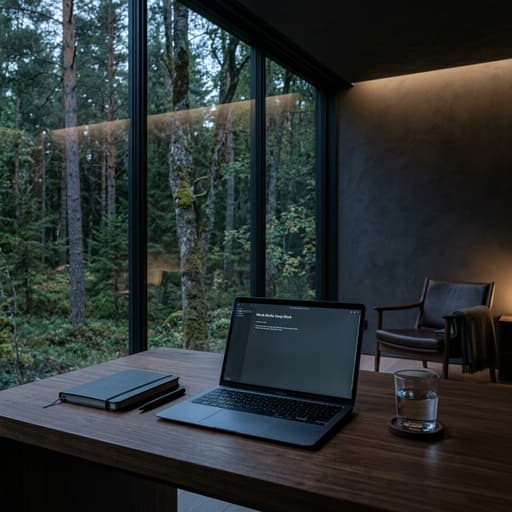
A dedicated workspace is non-negotiable, but it doesn't need to be a vault. Whether you carve out a corner of the bedroom, convert a closet, or claim a small desk in the spare room, the physical definition of that space is what matters. The key is using visual and sensory cues that your family will instinctively respect. A specific desk lamp always on during deep work, a "focus mode" playlist audible only to you, or even a simple sign on the door—these low-effort signals are often far more effective than a locked door that breeds resentment. Keep the proportion right: the boundary should be clear enough to protect your focus without being so impenetrable that it makes you feel absent from your own home.