









The Rise of Cognitive Architecture: Designing Homes for Mental Performance in 2026
In the professional landscape of 2026, the home has evolved from a place of residence into a place of ‘Cognitive Performance.’ As the boundaries between work and life have permanently blurred, the focus of smart home design has shifted toward ‘Cognitive Architecture’-the deliberate engineering of environments to optimize the human brain’s ability to focus, create, and recover. We no longer just design for comfort; we design for ‘Flow.’ This guide explores the principles of cognitive architecture and how high-performers are utilizing technology to turn their homes into mental powerhouses.
The Neuroscience of Space: Why Your Environment is Your Mind
Neuroscience has proven that our physical environment directly influences our brain’s structure and function-a concept known as ‘Neuro-Architectural Feedback.’ A cluttered, poorly lit, or noisy room triggers a constant, low-level stress response that drains cognitive resources. Conversely, a space designed with cognitive principles can lower cortisol, boost dopamine, and enhance the ‘Default Mode Network’-the part of the brain responsible for creativity and problem-solving. Cognitive architecture is the practice of aligning your external space with your internal biological needs. It is the ultimate ‘mental biohack’ for the 21st century.
1. Acoustic Sanctity and the Science of Focus
In an era of constant digital and urban noise, the ability to find total silence is a luxury. Cognitive architecture prioritizes ‘Acoustic Sanctity.’ This goes beyond simple soundproofing. High-end homes now utilize ‘Active Acoustic Dampening’-technology that monitors external frequencies (like traffic or sirens) and produces ‘anti-noise’ to neutralize them within the home.
Furthermore, we utilize ‘Sonic Zoning.’ Different areas of the home are engineered for different mental states. The ‘Deep Work Zone’ utilizes specific soundscapes-like pink noise or 40Hz Gamma binaural beats-integrated into the room’s sound system to encourage brainwave entrainment into a flow state. The ‘Social Zone’ utilizes acoustic panels to ensure that conversation is clear and comfortable without echo. This management of the ‘Auditory Environment’ ensures that your brain isn’t wasting energy processing irrelevant noise, allowing you to dedicate all your mental power to your most important work.
2. The Chromatic Environment: Lighting for Intellectual Clarity
We have long known that light affects our mood, but in 2026, we use ‘Spectral Tuning’ to affect our cognitive performance. Cognitive architecture utilizes ‘Human-Centric Lighting’ that changes its spectral composition throughout the day. In the morning, the system provides high-intensity ‘Cool-Blue’ light (around 6500K) to suppress melatonin and trigger a ‘Cortisol Awakening Response.’ This is the mental equivalent of a cold shower, providing immediate alertness and focus.
As the workday progresses, the light subtly shifts toward the ‘Warm-White’ spectrum to prevent eye strain and mental fatigue. But the real innovation is in ‘Focus-Specific Lighting.’ When the system detects you are engaged in deep work (via your wearables or your computer activity), it can adjust the local lighting to a specific frequency that has been shown to enhance concentration and reduce errors. By treating light as a ‘Cognitive Nutrient,’ you are providing your brain with the optimal conditions for high-level intellectual labor.
3. Sensory Ergonomics and the Architecture of Flow
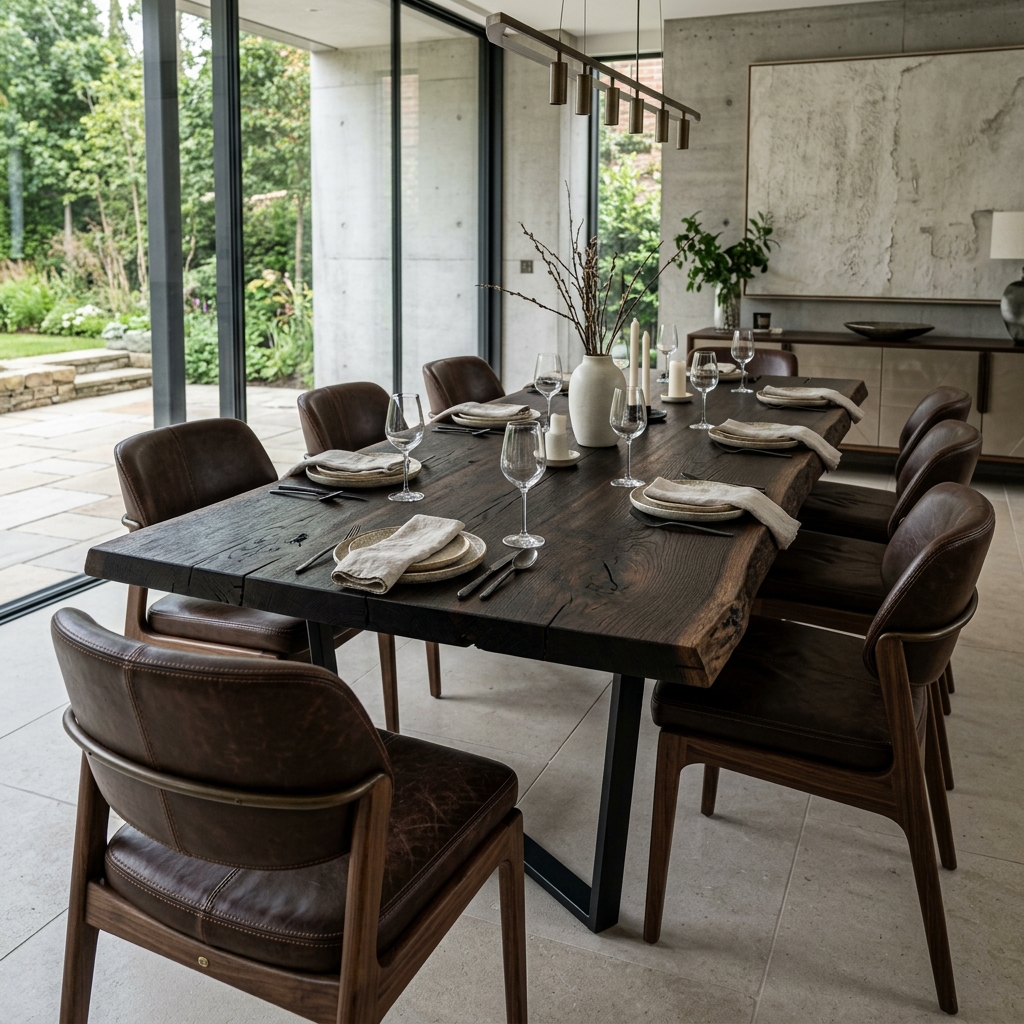
Cognitive architecture also focuses on ‘Sensory Ergonomics’-the tactile and visual elements that support mental states. This includes ‘Architectural Minimalist’-the removal of visual clutter that would otherwise compete for your ‘Prefrontal Cortex’s’ attention. Every surface in a focus-driven home is designed to be calm and non-distracting. Natural materials like matte oak and honed stone are prioritized for their ‘low-glare’ properties and their calming tactile feedback.
We also incorporate ‘Fractal Design.’ Nature is full of fractals-patterns that repeat at different scales. Research shows that viewing these patterns (found in wood grain, stone veining, or even specific wall textures) naturally lowers stress and improves cognitive function. By weaving these natural patterns into the fabric of the home, we create a ‘Cognitive Buffer.’ This allows you to stay in a flow state for longer periods without the mental exhaustion that comes from sterile, artificial environments. It’s about creating a home that ‘speaks’ the language of the brain.
4. The Recovery Alcove: Designing for Brain Detoxification
High performance is impossible without high-quality recovery. Cognitive architecture emphasizes the ‘Recovery Alcove’-a dedicated space for brain ‘unloading.’ This space is designed to be the opposite of a work zone. It features zero screens, ‘Low-Blue’ amber lighting, and weighted furniture that provides ‘Deep Pressure Stimulation’ to calm the nervous system.
The recovery alcove often includes ‘Bio-Feedback’ tools that guide you through breathing exercises or meditation to ensure that you have fully transitioned from ‘Performance Mode’ to ‘Recovery Mode.’ This is critical for the ‘Glymphatic System’-the brain’s waste-clearance system that operates primarily during rest. By designing a space that makes it easy to switch off, you ensure that your brain is fully detoxified and recharged for the next day. In 2026, the person who wins is the one who recovers the best. Your home is the primary tool for that recovery.
Conclusion: The Architecture of Potential
Cognitive architecture is the recognition that our homes are the primary ‘operating system’ for our lives. By intentionally designing our spaces to support focus, creativity, and recovery, we are removing the friction that prevents us from reaching our full potential. It is a shift from ‘housing a person’ to ’empowering a mind.’ As we move further into the digital age, our physical environment will become our most important asset in the fight for attention and excellence. Build a home that thinks as deeply as you do. Invest in your cognitive architecture, and discover what you are truly capable of.